Consumer Tips + Red Flags
While contractors play an integral role in the building and repair process and most are legitimate, there are others who are looking to take advantage of homeowners. The more knowledgeable you are as an insurance consumer, the less likely you are to fall victim to insurance fraud.
As an educated and informed consumer, you can serve as your best advocate.
Do your due diligence before hiring a contractor:
- Watch for red flag warning signs like the ones listed below.
- Before signing any contracts, contact your insurance company first to file your claim and make sure the damage is covered by your policy.
- Ask questions and do your research to ensure you are working with a licensed, insured and reputable contractor.
If the work being done by a contractor is part of an insurance claim, allow your insurance company to come out and inspect damages before you sign any paperwork and before a contractor starts work.
Did You Know?
Contractors are prohibited by law from providing policy coverage analysis and advice.
If you have questions about your insurance policy or coverage, contact your insurance agent or insurance company for answers.

How does fraud impact consumers and the insurance industry?
According to the Coalition Against Insurance Fraud, insurance fraud costs at least $308.6 billion per year and occurs in approximately 10% of property and casualty claims.
Insurance fraud tactics and schemes result in insurance companies paying higher negotiated settlements or paying additional costs to litigate these claims. Those expenses are typically passed on to consumers in the form of:

Increased Insurance Rates
The average homeowners premium in Florida is $3,815*
*Admitted carriers (excludes surplus lines carriers)

Lack of Availability
Companies restrict underwriting guidelines and exclude coverage for specific damage

Increased Mortgage Payments
Increased insurance rates included in escrow account resulting in an increase in mortgage payments
What constitutes fraud?
Fraud of any kind impacts both the victims and the industry its perpetrated against.
Per the Insurance Information Institute, “insurance fraud is a deliberate deception perpetrated against or by an insurance company or agent for the purpose of financial gain. Fraud may be committed at different points in the transaction by applicants, policyholders, third-party claimants, or professionals who provide services to claimants.”
Be cautious for offers of assistance in the aftermath of a storm.
Upwards of 10% or $9.3 billion is lost to post-disaster fraud.
- National Insurance Crime Bureau
Avoid unintentionally being involved in insurance fraud.
Insurance fraud can be an intentional act, or you may unknowingly commit or be involved in fraud.
Intentional
- Filing an insurance claim for...
- Stolen property that was not taken
- Hurricane damage that was not caused by a storm
- Setting your home or property on fire
- Inflating the cost of a damaged item
- Allowing someone to use your insurance benefits for services
- Falsely claiming to be injured in a vehicle accident
Unintentional/Unknowingly
- Your Public Adjuster files an insurance claim for damage that doesn't exist or for more damage than exists
- Your vehicle repair company charges your insurance for new parts when used parts were installed
- Your agent provides false information on your insurance application to obtain a better rate
- A repair person replaces your windshield and charges your insurance company when there is little or no damage

How to Report Insurance Fraud in Florida
If you or someone you know have been a victim of insurance fraud, contact the Florida Department of Financial Services' Criminal Investigations Division to report the incident. Contractor fraud is illegal and can lead to an arrest and prosecution.
- DFS Fraud Hotline: 1-800-378-0445
- DFS Online Fraud Reporting Portal: https://First.FLDFS.com
Insurance fraud is a crime in 48 states, including Florida.
- Coalition Against Insurance Fraud
How People Justify Committing Insurance Fraud:
- 70% say high premiums
- 63% say insurance company profit is too high
- 52% believe they are entitled to a fair return on the premiums paid over years
- Coalition Against Insurance Fraud
What's Right and What's Wrong?
When an insurance company pays a contractor for work, the homeowner expects the contractor to complete the work in a manner that is of high quality. If a contractor receives an insurance payment and abandons the job, intentionally does poor quality work or uses subpar materials, the contractor is committing insurance fraud.
These acts of insurance fraud can impact you, as a consumer, significantly. If your home is left unfinished, you may have to pay out-of-pocket to complete or re-construct the repairs. Additionally, more damage can occur as a result of poor work or subpar materials used. An insurance company will not pay for the same damage twice - if you, or a third-party on your behalf, file an insurance claim for damage for a specific timeframe, the insurance company will not pay to repair that damage again.
How to tell if a contractor is breaking the law:
WHAT'S RIGHT | WHAT'S WRONG | ||
 | Require consumer to pay insurance deductible |  | Waive an insurance deductible or offer services at no charge for filing an insurance claim |
| Advertise construction services to potential clients including the requirement that the consumer pay their deductible | | Mislead consumers using untrue or deceptive advertisements |
| Discuss, explain and offer a quote for construction or repair of property | | Initiate, negotiate or influence the filing or settlement of an insurance claim on behalf of a consumer |
| Obtain a building permit from local officials, as required | | Construct or repair property without the appropriate permit or disregard local ordinances |

View the complete list of permissible and prohibited actions by a contractor and the violations involved:
Contractor Prohibitions
Consumer Tips + Red Flags
The consumer tips and red flag warning signs below may help reduce your chance of being victimized by a contractor looking to commit insurance fraud or scam you out of your money:

Choosing A Contractor
Don’t let contractors pressure you into signing a contract. Take your time and do research first.
Verify that the contractor has an active, valid Florida license:
- Verify Contractor License:
- Verify that the contractor has either:
- Workers’ Compensation Insurance
https://dwcdataportal.fldfs.com/ProofOfCoverage.aspx - Proof of a Workers’ Compensation Exemption
https://dwcdataportal.fldfs.com/Exemption.aspx
- Workers’ Compensation Insurance
- Verify that the contractor has general liability insurance by requesting a Certificate of Insurance.

Don’t allow a contractor to inspect your property, including your roof, until you have verified that they are licensed and insured.
Check For Complaints
- Check if the contractor has any complaints filed against him or her on the Better Business Bureau’s website at www.BBB.org.
Get At Least Three Estimates
- Obtain detailed, itemized written estimates from at least three licensed, insured contractors. Ask friends, co-workers, or family members for referrals.
Ask For References
- Ask the contractor for local references, preferably references that are less than 12 months old.
 Red Flags
Use caution if a contractor:
- Shows up unsolicited and points out damage you have not previously noticed.
- Asks for full payment up front or asks for payment in cash only.
- Promises services at no charge to you or offers to waive your insurance deductible.
- Offers you payment or a gift card for a free inspection.
- Is unable or unwilling to provide references for other work they have performed.
- Is not willing to provide you with evidence of their Certificates of Insurance for General Liability and Workers’ Compensation.
- Pressures you to file an insurance claim.
- Claims the price they are offering is for one-day-only or pressures you to act immediately because a deadline is approaching.
- Provides an estimate notably lower or significantly higher in comparison to other estimates you have received for the same work.
- Does not have a valid and active Florida license.
- Provides you with an estimate that is a lump sum amount, or an estimate that is very general and lacks specific, itemized details.
- Tells you they prefer to handle all communications in-person and they are reluctant to provide you with written documents or use mail, email, or text message.
- Does not have an established business location or their place of contact is somewhere other than an established business, such as a motel, P.O. box, work truck, or work trailer.
Contracts and Documentation
Always get a copy of every document you sign before the contractor starts work.
Insurance Documentation
- Always get a copy of the contractor’s proof of General Liability and Workers’ Compensation insurance or Proof of Workers’ Compensation Exemption BEFORE signing a contract or repair agreement.
Never Sign Documents That Include Blank Spaces
- Do not leave any blank areas on a signed contract or sign a contract with incomplete sections; this can allow for terms or conditions to be added at a later date that you did not agree to.
Understand Everything You Sign
- When signing a document, do not sign it if you do not understand it! If you need to, request assistance from a trusted professional, family member or friend with interpreting contract terms and understanding what you are about to sign.
Building Permits
- Be sure the contract states that the contractor will obtain the necessary permits for the work.
Documentation of All Construction Details
- Ensure everything is in writing, including a full description of the work the contractor will perform, the start date, the estimated completion date, an itemized budget, and a payment schedule.
Direction to Pay
- Know the consequences of signing a Direction to Pay or similar agreement. A Direction to Pay agreement may require the insurance company to pay the contractor directly (sometimes before work is complete). You are not required to sign this documents to have work done. Look for language that seems to allow a contractor to submit claims to or ask for payment from your insurance company without consulting you first.
Cancellation
- By law, you can cancel a contract to replace or repair a roof without penalty or obligation within 10 days after the execution of the contract or by the start of work, whichever comes first. This provision applies to contracts entered into after a declared state of emergency, such as a hurricane. Contractors must include cancellation rights on the contract or as an attachment.
Red Flags
Use caution if a contractor:
- Does not or is unwilling to provide a copy of the contract or agreement.
- Does not allow you to review the contract or agreement, or scrolls directly to the signature line.
- Pressures you to sign a contract such as a Direction to Pay agreement.

Home Improvement & Fraud and Scams
are among the Top 10 categories of consumer complaints reported to consumer agencies.
- Consumer Federation of America
Payments
Contractors should offer you multiple payment options.
Advance Payments
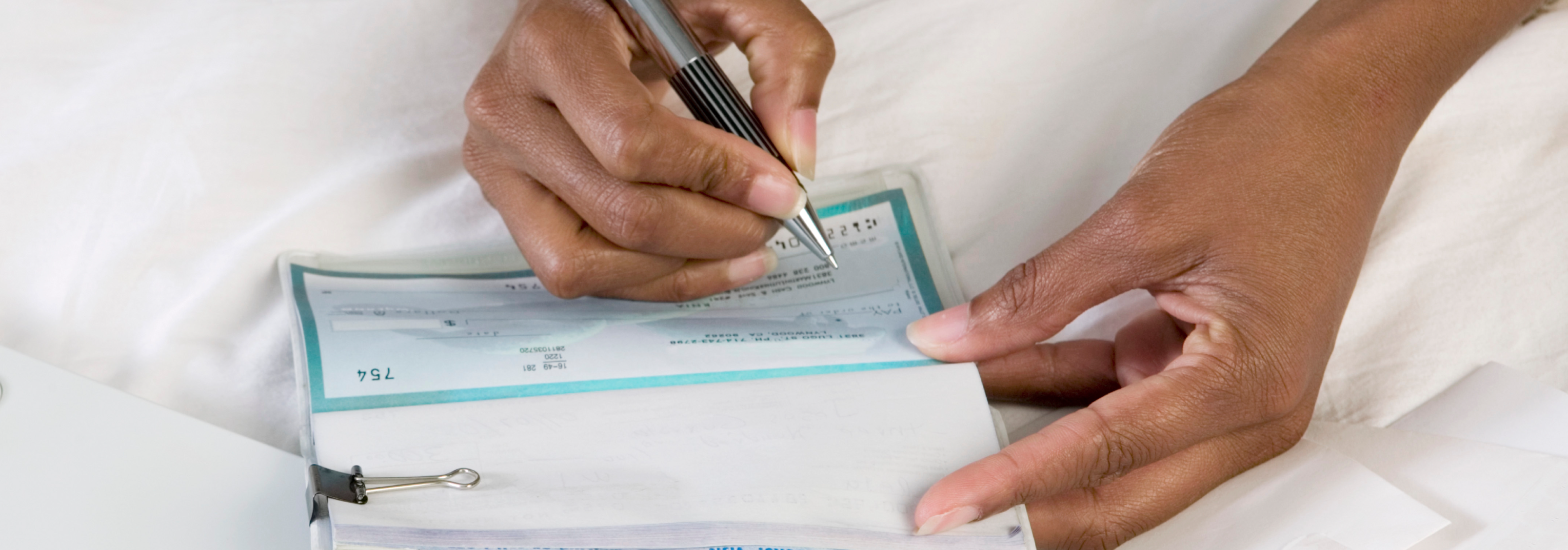
- Do not pay in cash or pay the full payment up front. Sometimes advance payment to the contractor is necessary to pay for materials, but this advance payment should never be more than 50% of the full price for the service. Always get a receipt for payments made.
Final Payment
- Do not make the final payment to the contractor until ALL work listed on the contract has been completed to your satisfaction. Do not pay with cash; use a check or credit card instead to create a record of your payment.
Subcontractor and Supplier Payments
- A licensed contractor must compensate a subcontractor or supplier, unless there is a bona fide dispute regarding the amount due, if any, for services, labor, or materials:
- Within 45 days after receiving payment for the services performed or materials supplied by the subcontractor or supplier; or
- In accordance with the terms of the contract for such services, labor, or materials
- A licensed contractor who knowingly or willfully violates this section is subject to disciplinary proceedings as provided in Section 489.129, Florida Statutes.
Contractor’s Final Payment Affidavit
- Before making the final payment to a contractor, ask the contractor for the Contractor’s Final Payment Affidavit to verify that the contractor has paid all of the subcontractors and suppliers. Florida law, Section 713.06(3)(d), Florida Statutes, requires contractors to provide a Contractor’s Final Payment Affidavit when the final payment for the contract becomes due.
If debt remains unpaid, Florida law allows subcontractors/suppliers to place a lien on your home, as provided in Sections 713.05 and 713.06, Florida Statutes.
Red Flags
Use caution if a contractor:
- Asks for full payment up front or asks for payment in cash only.
- Pressures you to encourage your family, friends or neighbors to hire them for services.
- Offers you a discount for letting them use leftover materials from a previous job.
Explore more of Demolish Contractor Fraud: Steps To Avoid Falling Victim
Read real life experiences Florida consumers have faced with contractor fraud and use their stories to help spot the red flags for yourself and others in your life:

Explore the contractor fraud resources available including consumer education materials and contact information for helpful services and organizations:
Contact Your ICA
Florida's Insurance Consumer Advocate
Office of the Insurance Consumer Advocate
200 East Gaines Street, Tallahassee, FL 32399
Phone: (850) 413-5923
Email: YourFLVoice@MyFloridaCFO.com